Kick-off Action Lab AHOPM - Building a system where food and health come together
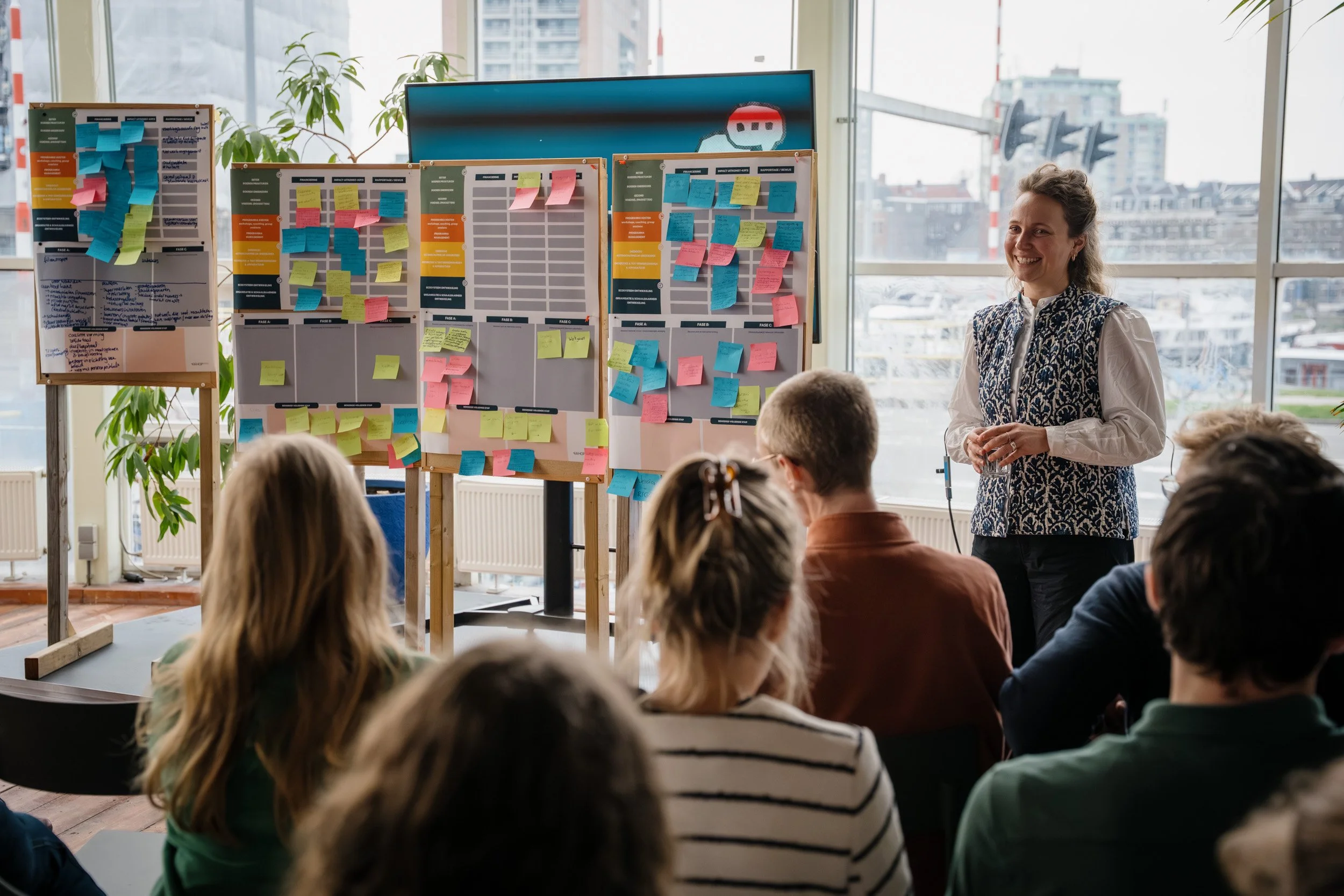
On March 24 2026, the kickoff of a new series of Action Labs focused on HarvestCare’s Agri-Health Outcome Payment (AHOPM) took place at Bar Stroom in Rotterdam. It was an afternoon defined by engagement, connection, and a strong willingness to act. With a diverse group of participants from agriculture, healthcare, government, impact finance, and research, an important first step was taken toward answering a fundamental question: how can we make healthy food from agriculture an integral part of our healthcare system?
A shared ambition: from talking to doing
From the very start, it was clear where the strength of the gathering lay. Participants—from organisations including Erasmus MC, Rabobank, Triodos Bank, Invest-NL, Social Finance NL, philanthropic actors, the Diabetes Fund, the Province of South Holland, the Municipality of Rotterdam, and several agricultural entrepreneurs—each brought their own perspectives, but shared a common ambition: connection.
An interactive opening session explored what participants hoped to gain from the day. Networking, collaboration, and cross-sector alignment stood out as key themes. The tone was set: this was not a conversation that would remain at the level of ideas, but a process focused on action.
Agri-health: connecting soil and health
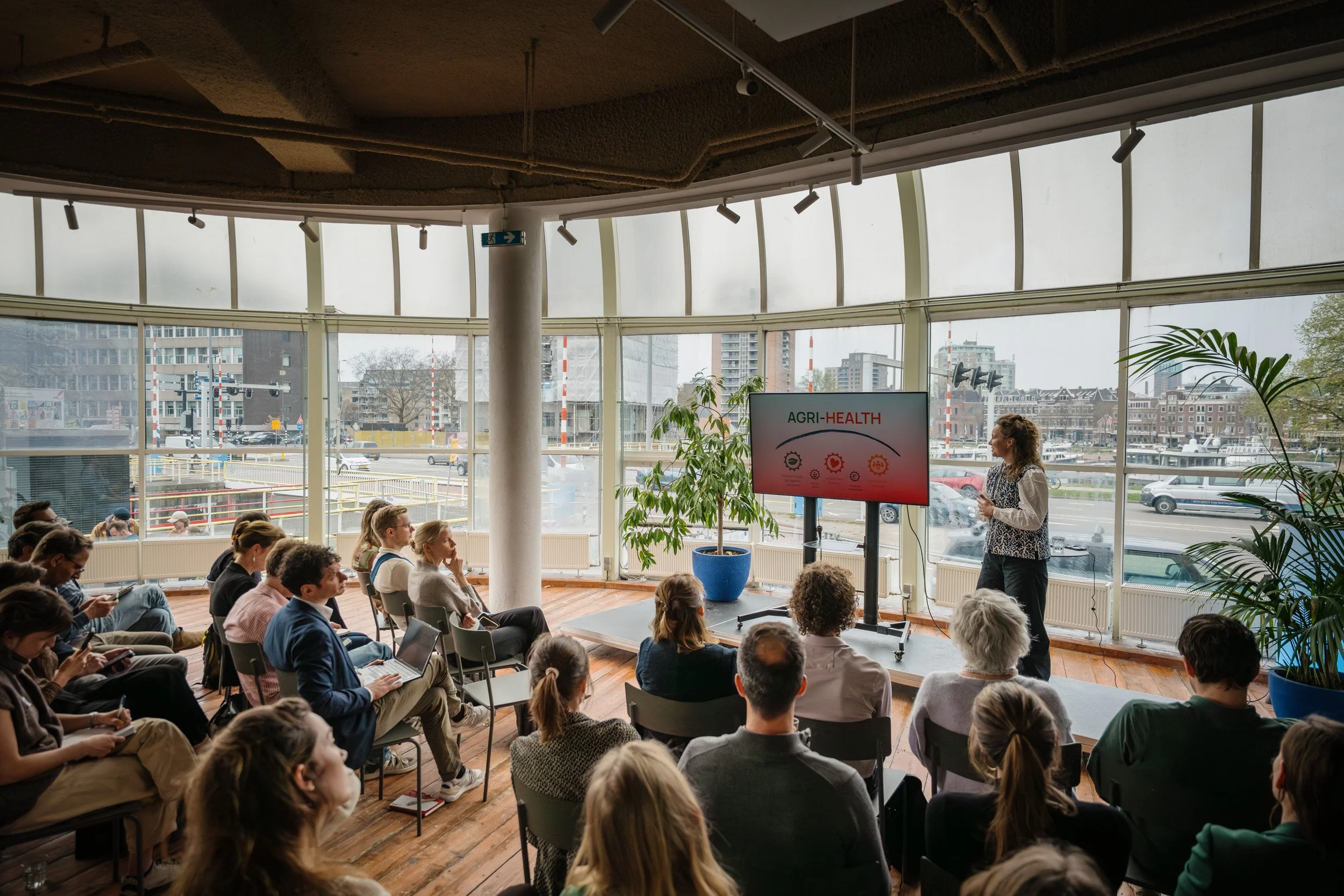
During the introduction, Anne van de Peppel, co-founder of HarvestCare, outlined the core challenge. While the link between agriculture and health is clear, it remains insufficiently integrated in practice. At the same time, both healthcare systems and agriculture are under increasing pressure—from the rise in chronic diseases to declining biodiversity and deteriorating soil quality—yet solutions often remain fragmented.
The starting point of the AHOP model is straightforward: healthy soils lead to healthy food, which in turn leads to healthier people. By no longer treating agriculture and healthcare as separate systems, but as one interconnected system, new revenue models for farmers can emerge alongside improved public health outcomes.
Outcome-based financing as a key to scaling
There was broad recognition that initiatives like these can have a significant impact. The challenge lies in scaling—and therefore in financing.
In her presentation, Nina Waldhauer of Invest-NL emphasised that many societal transitions stall at this point. The opportunity lies in connecting different types of value—health outcomes, sustainability gains, and economic returns. Outcome-based financing, where funding is tied to results rather than activities, offers a promising pathway. However, it also requires new forms of collaboration and shared responsibility.

Nina Berculo of Social Finance NL built on this with insights from recent research into financing regenerative agriculture and lifestyle interventions. A key conclusion: costs and benefits are currently distributed across different stakeholders. Investments are often made by farmers or initiators, while savings accrue to health insurers, municipalities, or society at large.
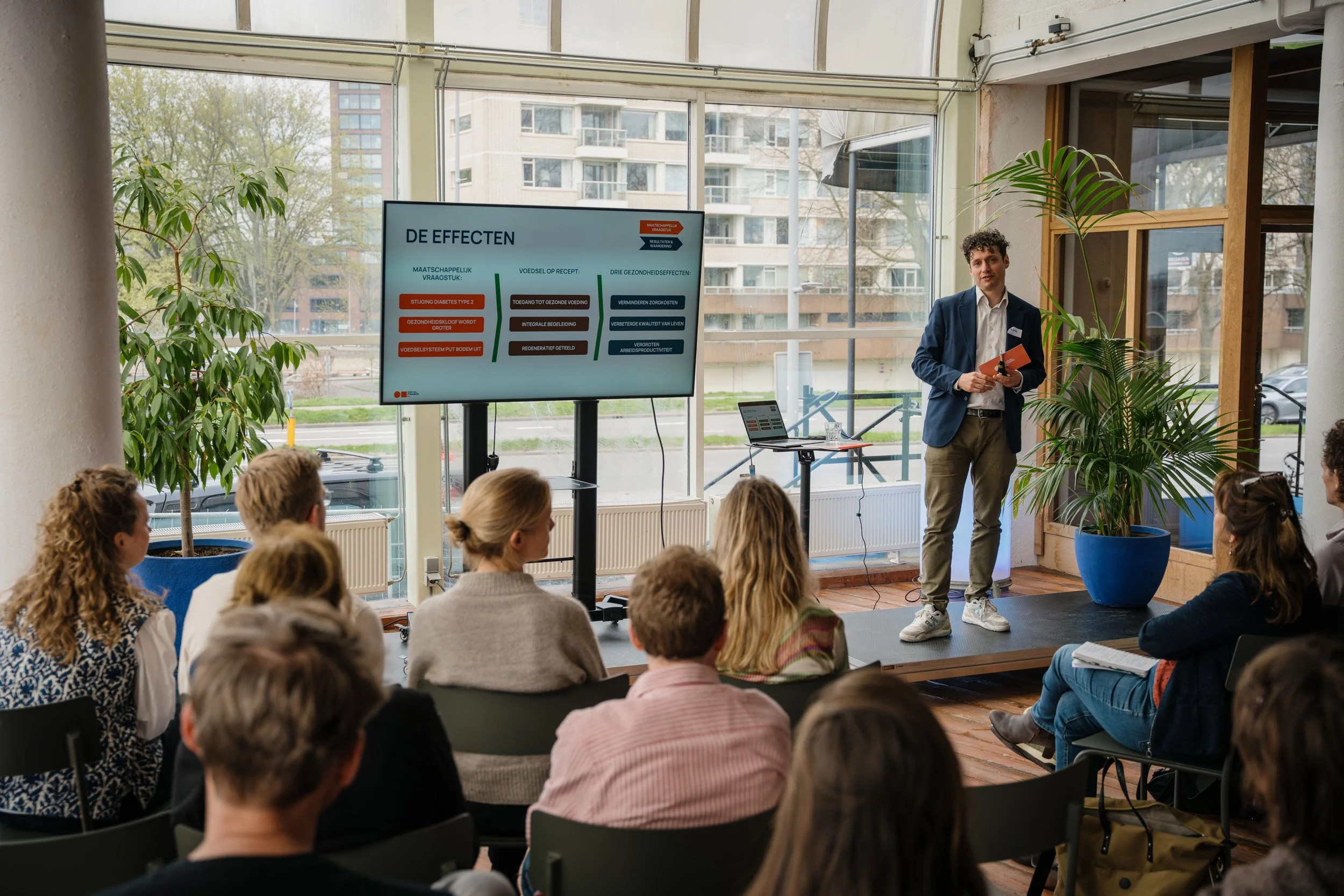
Developing sustainable financing models, therefore, requires a fair distribution of costs and benefits, as well as the ability to measure impact. At the same time, it was acknowledged that not everything needs to be perfectly measurable before taking action. Starting somewhere is essential.
Food is Medicine: from concept to system change
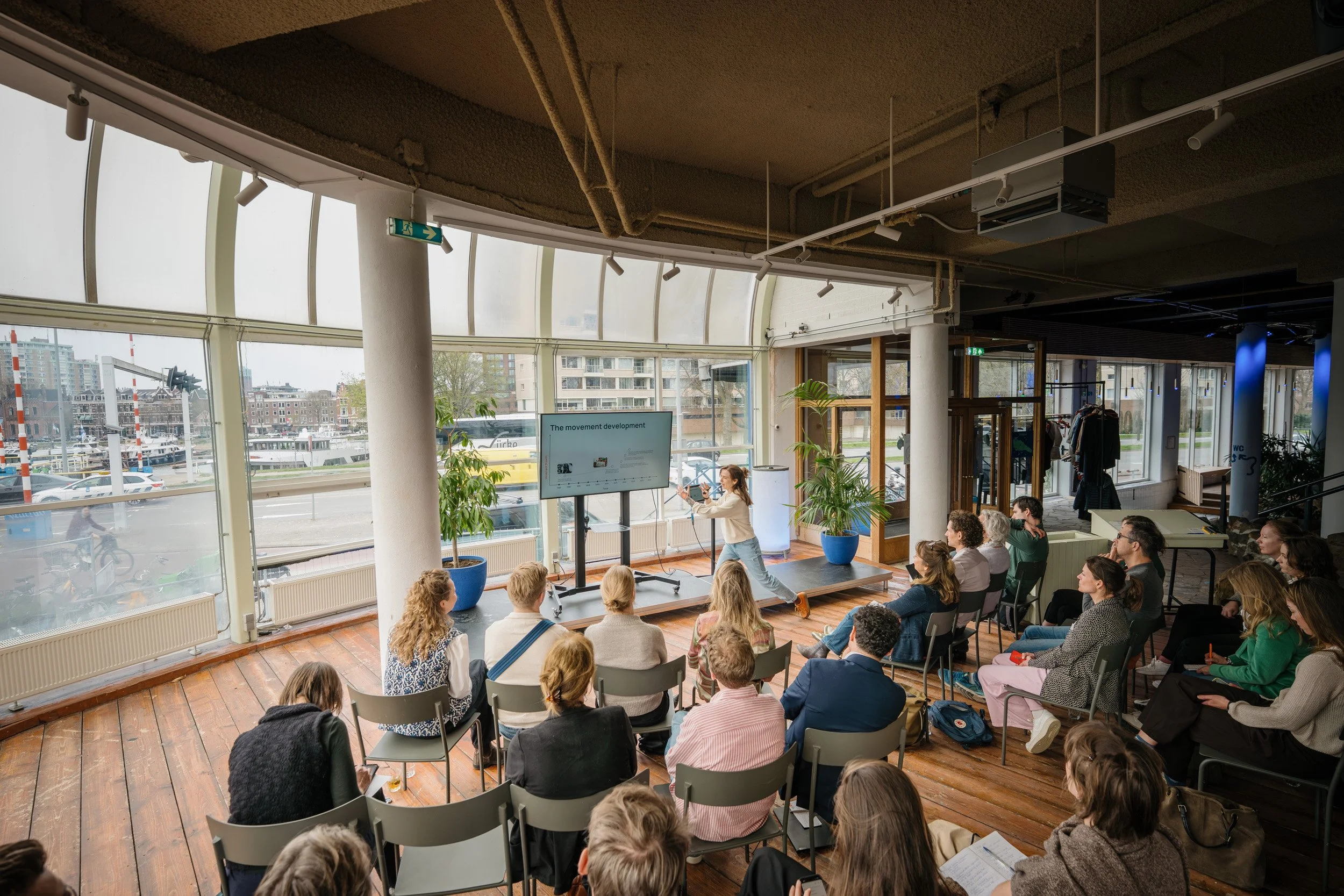
The Action Labs are grounded in the broader Food is Medicine movement. This concept was introduced by Zuzanna Zielinska, founder of HarvestCare. What started as a niche movement is now rapidly gaining traction worldwide as a serious pillar in health policy.
At its core is the idea of structurally integrating nutrition into prevention and treatment within healthcare systems. This goes beyond simply advising people to eat healthier; it requires removing barriers by providing actual access to healthy food, combined with support and behaviour change. It is precisely this combination that drives lasting impact.
The movement has grown significantly in recent years, particularly in the United States, where increasing scientific evidence shows that targeted nutrition interventions can lead to better health outcomes and lower healthcare costs. In Europe, Food is Medicine is also gaining momentum as a promising approach to connecting healthcare, agriculture, and lifestyle.
From insights to concrete next steps
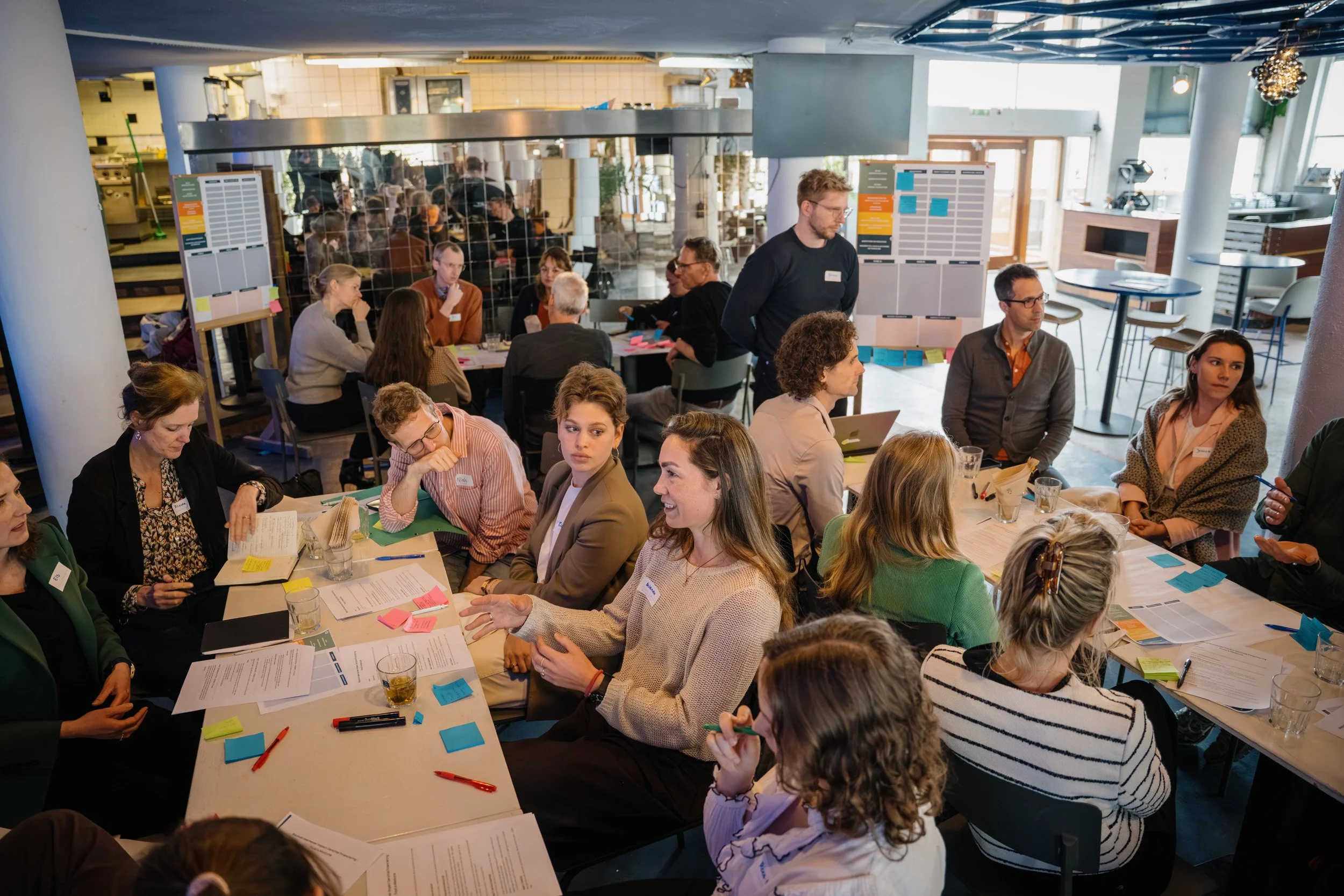
During the breakout sessions, participants worked together on a central question: what is needed to make this transition financially viable?
Several key insights emerged:
There is a need for financing across different stages, from pilots to scaling
Evidence and measurability are important, but should not block innovation
Greater clarity is needed on what types of evidence matter to different funders
Additional stakeholders, such as employers and supermarkets, have a crucial role to play
Legal and systemic barriers still pose challenges
Opportunities exist in fiscal incentives and alternative financing models
It also became clear that building a strong consortium is essential. One in which public and private actors work together.
This is just the beginning
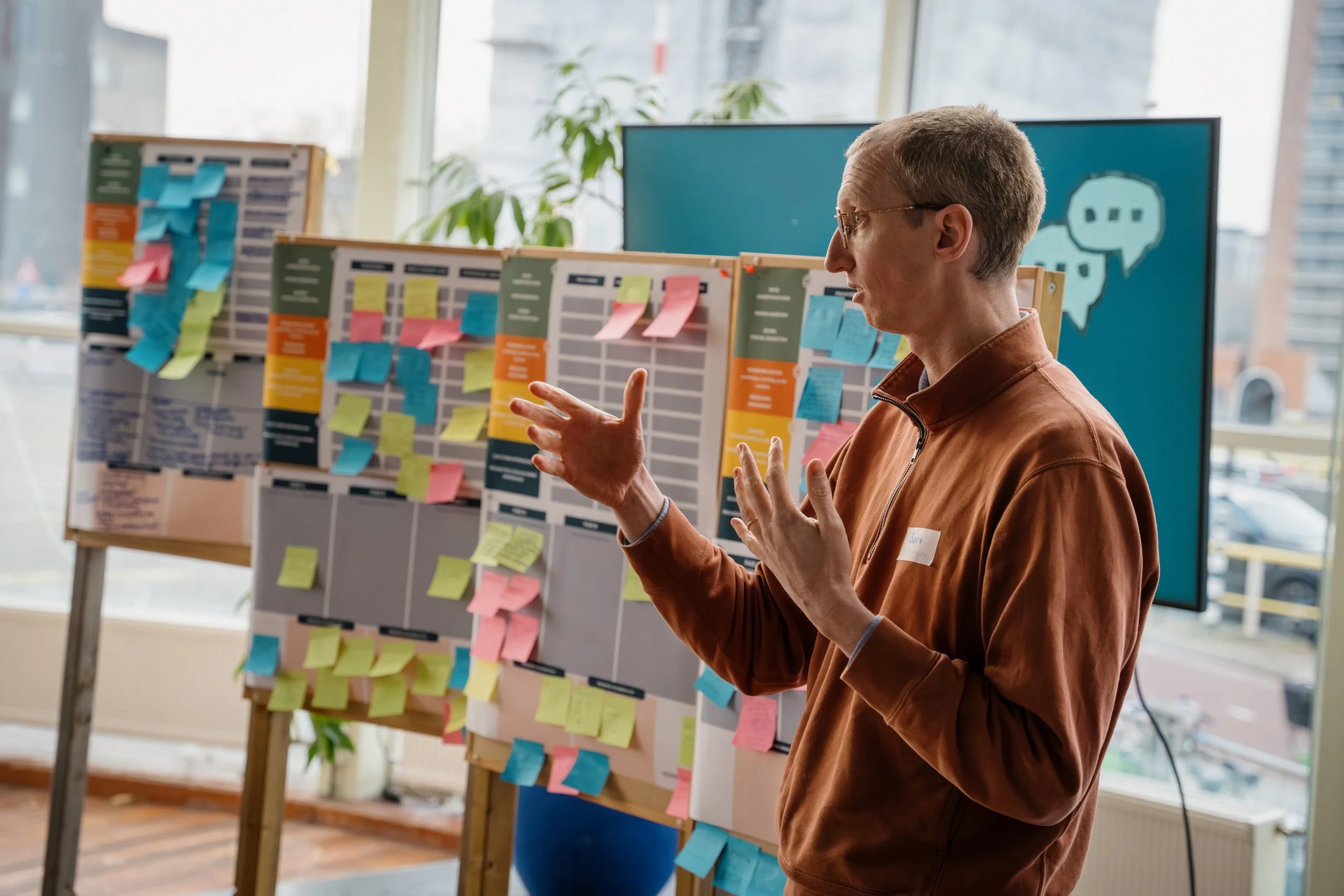
The afternoon concluded with a shared reflection and a clear takeaway: the challenge is complex, but the building blocks are already in place. What is needed now is commitment to move forward together.
The energy in the room was tangible. As one participant put it:
“We don’t just have a good idea—we have the people to make it happen. Now it’s time to move forward.”
This kick-off marks an important first step. The upcoming Action Labs will further explore outcome-based financing models, evidence-building, and collaboration, with one shared goal: creating a system in which healthy food is a natural and integral part of healthcare.
Want to learn more about agri-health and the Outcome Payment Model? Visit ahop.com