Food is Medicine, Not an Afterthought: Insights from Zorg & Food 2026
At HarvestCare, our mission is to make nutritious food a structural part of healthcare — not a recommendation, but a real, accessible element of treatment. That is exactly why the Zorg & Food conference 2026 felt like a natural place for us to be. The name says it all: food and health, together. The conversation happening there is precisely the one we are working to advance every day.
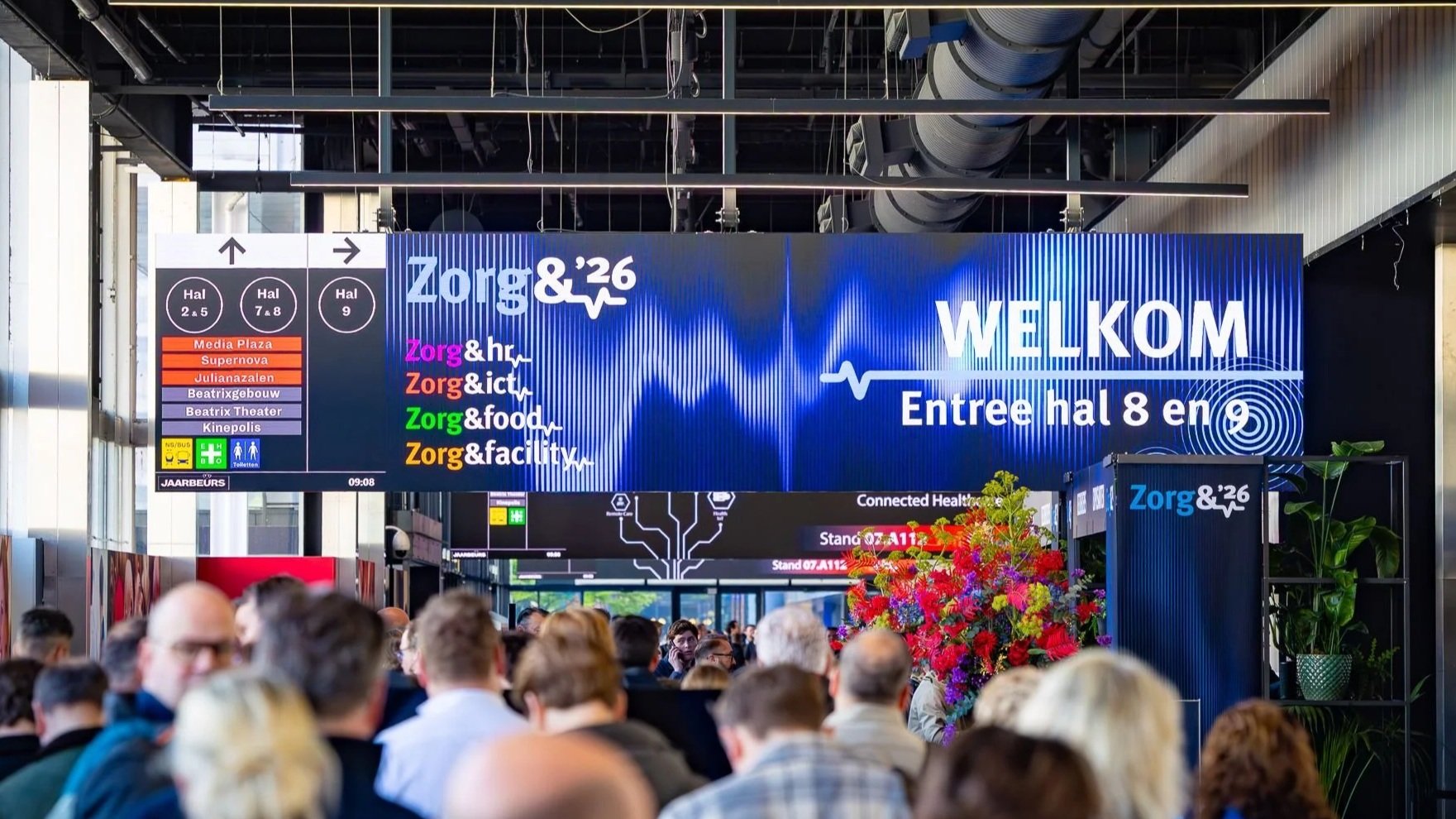
The HarvestCare team attended the Zorg & Food conference 2026. The conference focused on the importance of plant-based, unprocessed foods in improving patients' health within the healthcare system and beyond. Since HarvestCare works on connecting the healthcare system with the agrifood system by structurally providing nutritious food in type 2 diabetes care, attending this conference was essential.
The healthcare system cannot keep up — and food is part of why
The urgency of systemic change in the healthcare system was extensively discussed. Anneke van Veen, pulmonologist at the CWZ in Nijmegen, mentions in her talk 'The power of healthy food' the risk of overburdening the healthcare system if the demand for care keeps increasing, as it does now. For the past decades, populations have been getting older, but healthy life expectancy has not increased. The percentage of chronic multimorbidity continues to rise. According to Anneke, this is related to the food industry, which 'doesn't aim at feeding us, but aims at filling us'. We have become passive consumers of ultra-processed food, who exercise too little and spend too much time on social media. Because of this change in our way of living, lifestyle diseases such as cardiovascular disease and type 2 diabetes have developed manifold. 'At this moment, 1 in 5 deaths is linked to dietary factors'.
It can't be blamed on a lack of knowledge about the relationship between nutritious food and health. Researchers such as Dean Ornish have been studying the relationship between nutritious food and the human body for years. Nutritious food, specifically in this context, means plant-based food. Another research project, 'Plants for Joints', the PhD thesis of Wendy Walrabenstein, shows the positive effects of plant-based diets on rheumatoid arthritis and osteoarthritis. According to Anneke, integrating all this knowledge into the hospital's guidelines is already sufficient. 'For cardiologists and oncologists, advice on healthy food and an active lifestyle is intertwined in guidelines and treatment plans of patients'.
According to Anneke, the real problem lies in the transfer of knowledge from the doctor to the patient. Information about the effects of nutritious food and exercise on human health is not integrated into the medical studies in the Netherlands. In addition, doctors take an example of what they see from their educator in the consultation room. If they have never seen the example of the transfer of information about healthy food and exercise in the consultation room, they are less likely to do this themselves.
The modern food supply chain was highlighted as the most important reason for unhealthy diets
The patient's behavioural change starts with a tasty plant-based supply. There are some examples of hospitals in the Netherlands that have changed their food supply of hospital meals and in canteens to plant-based products, where an exceptional choice for meat is made pricier. However, this doesn't happen on a large enough scale yet.
From vision to behavioural change
Where Anneke highlighted the medical side of the story, Lotte Kunst focused on a more practical side. During her lecture, she offered a step-by-step plan by which we can move from a vision of healthy food to behavioural and cultural change. 'It starts with a change in policy, which changes the supply of food, followed by a change in the food environment.'
The food system itself needs to change
When we shift our focus from the medical system to the agri-food system, two major challenges are likely to emerge in the coming years, according to Jan Buining (founder of TastyBasics). The first challenge starts with the sustainability of the system, which is not maintainable as it is now. 'Only if we farm regeneratively to obtain all the animal products that we are consuming now, there is a possibility to produce without crossing planetary boundaries.' The second challenge is human health, which comes into question if we keep producing our food as it is now. Moreover, social injustice plays an important role in this second challenge: the consequences of an unhealthy ultra-processed food supply weigh most heavily on people from lower socio-economic classes. Jan Buining pleads for a shift in our focus from ultra-processed food to unprocessed food. 'At this moment, half of the calories we consume on a daily basis originate from ultra-processed foods'. Jan acknowledges that we can't hold the individual responsible for this. 'The food environment is unhealthy, and it costs people too much discipline to expect from them that they can fight against these temptations.'
This is exactly what HarvestCare is working to change
This is why HarvestCare works with 'Voedsel op Recept'. We challenge this unjust and unhealthy food provisioning by moving away from individual responsibility for a healthy diet, with only recommendations on what food to eat, to structural healthy food provisioning in type 2 diabetes healthcare. HarvestCare is part of a broader movement on this topic, called the Food is Medicine movement. This movement is working to integrate food as a structural component of healthcare internationally. Together with all the others active in the Food is Medicine movement, we work towards a real transformation in planetary health. The conference made clear that the momentum behind this movement is building. If you want to be part of that change, we would love to connect.