The first Dutch randomised controlled trial of a Food Pharmacy for type 2 diabetes
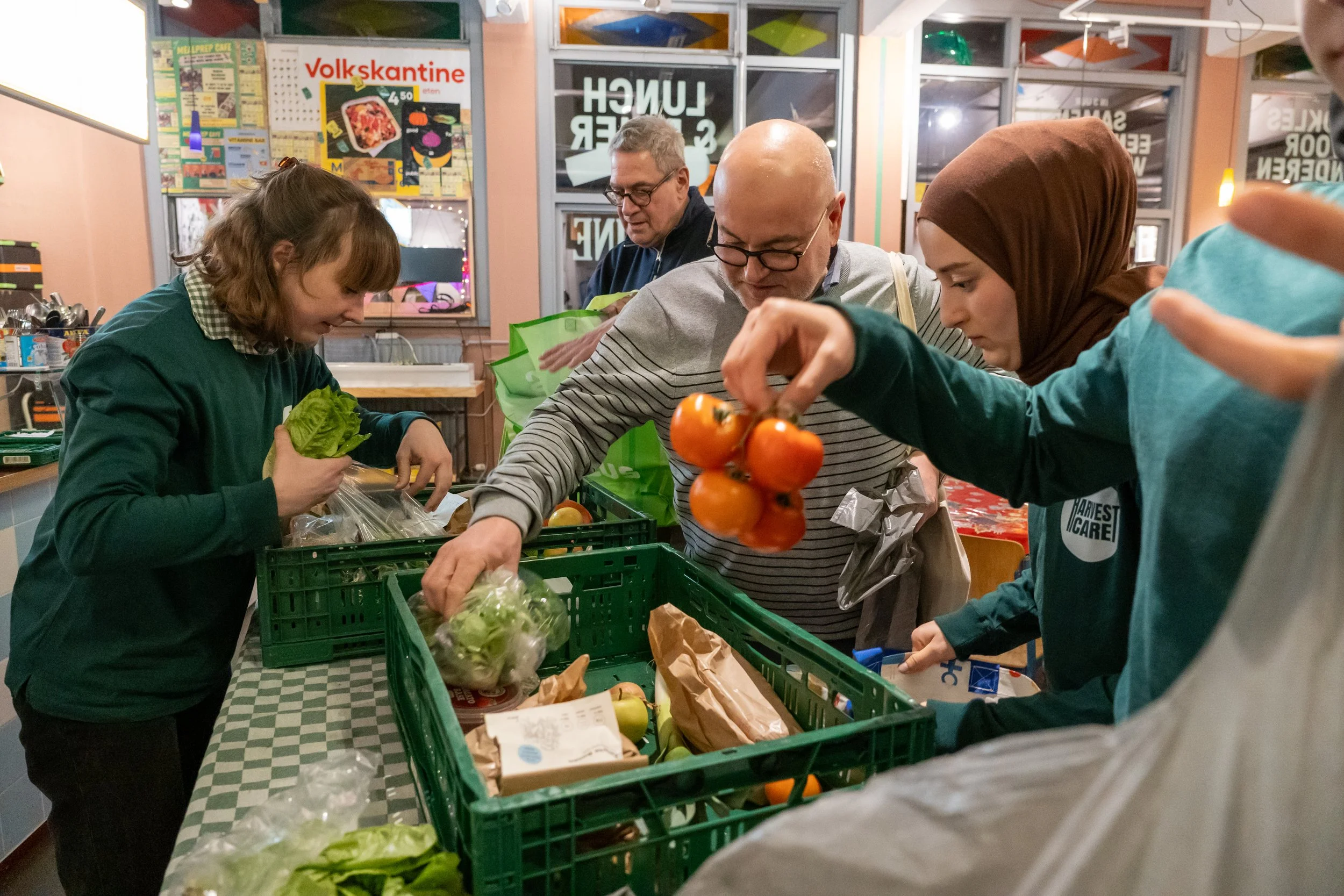
In early 2025, HarvestCare launched the first Dutch randomised controlled trial of a Food Pharmacy programme for people living with type 2 diabetes and overweight in Rotterdam. The programme started in January and was completed in the first April, followed by a three-month phase-out period.
This pilot marked an important step for HarvestCare. It allowed us not only to study the health effects of a Food Pharmacy programme, but also to learn how to organise and deliver this type of care in practice: from onboarding participants to food logistics, group facilitation, and community support.
What the programme looked like
A total of 35 participants took part in the study, of whom 17 were randomised to the Food Pharmacy Programme and 18 to usual care. The participants were adults with type 2 diabetes and overweight.
Over the course of 12 weeks, we provided more than 1,500 kilos of food, with an impressive 97% pickup rate. The boxes included 43 different vegetables, 6 different fruits, 8 different beans, and 8 different leafy greens. Alongside the food, participants were invited into a wider programme of support and community.
The intervention included:
2 cooking workshops
3 coaching sessions
1 bread-making workshop
an opening event
a closing event
Participants also stayed active through a WhatsApp group, where they shared recipes, ideas, and everyday inspiration.
The first health results
Despite the relatively small sample size, the first results were encouraging. After three months, participants in the intervention group showed statistically significant improvements in several outcomes.
In the intervention group:
weight decreased from 92.0 kg to 90.8 kg
BMI decreased significantly
fasting glucose decreased from 8.9 to 8.3 mmol/L
These are modest shifts, but meaningful ones - especially within a short intervention period and a small pilot population. Reaching statistical significance this early suggests that the programme has real potential.
Not all effects remained statistically significant at the three-month follow-up. However, some changes did persist. At six months, waist circumference remained significantly lower than at baseline in the intervention group, and systolic blood pressure also showed significant improvement.
Better treatment satisfaction and quality of life
The programme not only affected physical measures. Participants also reported feeling better about their care and their general well-being.
After three months, treatment satisfaction improved significantly in the intervention group, and scores were higher than in the control group at both three and six months.
We also saw improvements in several quality-of-life domains after the intervention period. Within the intervention group, significant gains were observed in:
physical limitations
emotional wellbeing
pain
general health
General health scores in the intervention group increased from 45.6 to 55.3 after three months.
For us, this is a very important part of the story. Food Pharmacy is not only about biomarkers. It is also about how people feel, how supported they are, and whether care becomes more motivating and more human.
Changes in food intake
The nutritional results were also strong. After 3 months, participants in the intervention group showed significant reductions in energy and fat intake, while vegetable and fruit intake increased.
A few of the clearest changes were:
energy intake decreased from 1470 kcal to 1173 kcal
vegetable intake increased from 145.0 grams to 198.4 grams
fruit intake also increased significantly during the intervention period
At follow-up, energy and carbohydrate intake remained significantly lower than baseline, while fruit intake also remained significantly higher.
That tells us something important: even when some clinical effects became less pronounced over time, parts of the dietary shift continued beyond the active programme period.
What we learned
For Harvest Care, this pilot was a major learning experience. It gave us the chance to facilitate the first implementation of this model in the Netherlands and to better understand what it takes to make it work in real life.
We learned about:
participant onboarding
food logistic
group facilitation
creating engagement beyond the food itself
combining medical research with practical programme delivery
These lessons are just as valuable as the first health outcomes. Building a Food Pharmacy programme is not only about proving that it works. It is also about learning how to deliver it well.
What comes next
This study will be published later in 2026, and we expect around three scientific articles to result from it.
At the same time, we are already taking these lessons forward. We will use what we have learned to optimise the programme and further improve the model, with the aim of delivering even better care for people with type 2 diabetes in Rotterdam in 2026.
Mission
At Harvest Care, we believe that food should play a much bigger role in healthcare. This pilot was an important first step in showing what that can look like in practice in the Dutch context.
By connecting fresh, nourishing food, community support, and medical research, we are working toward a healthcare model that treats people more fully and supports healthier lives from the ground up.