Measuring What Matters: Our Approach to Nutrient Density
At HarvestCare, we work at the intersection of two movements that are usually kept separate: Food is Medicine and regenerative agriculture. Our conviction is that they're really one movement - because the health of what's on someone's plate starts with the health of the soil it grew in.
We had the chance to test that connection directly in 2024. As part of our Food Pharmacy programme, the local, organic and regenerative produce we distributed was analysed as part of Leiden University's Soil2Guts research, with our carrots, potatoes and leafy greens tested for soil health and micronutrient content.
It was a valuable first step, and it also taught us something important: rigorous nutrient density research is complex, labour-intensive and logistically demanding - often simply unachievable for most farm operations. Full micronutrient panels require laboratory equipment, trained analysts, a dedicated team and real investment in machinery - resources that most farms, and most food organisations, don't have on hand. If we want to connect soil health, plant health and human health at scale, we need tools that are both scientifically meaningful and realistically achievable.
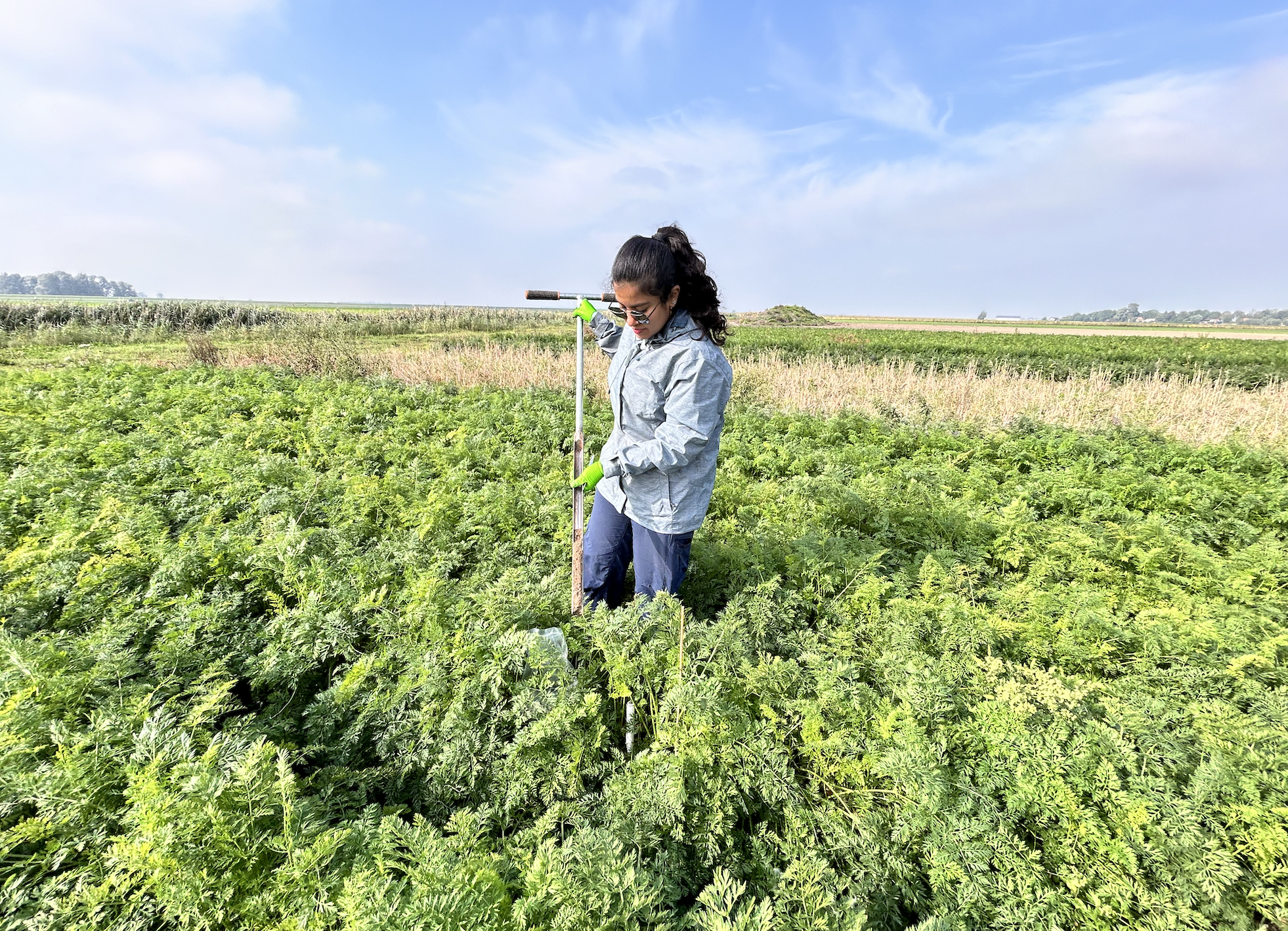
In 2026, we took this further ourselves, working with Marco Nardini, an agronomist specialising in vegetable production and water management. Together, we visited our supplying farms and started building our own light field toolkit, alongside the Brix readings described below: a soil compaction meter, or penetrometer, which measures the resistance soil offers to a probe as an indicator of how compacted the soil is and how freely roots, water and air can move through it; and an EC (electrical conductivity) meter, which measures soluble nutrients and salinity in the soil. As Marco explains, EC doesn't measure biological life directly, but salinity and soluble nutrient levels are an indirect signal of how much organic matter, and how much life, the soil is likely holding - which soil science broadly supports: EC is a recognised indirect indicator of nutrient availability and fertility, closely tied to organic matter content. Together with a compaction reading, it gives us a quick, repeatable field-level approximation of the conditions soil biology needs to thrive - a practical complement to the deeper lab-based research.
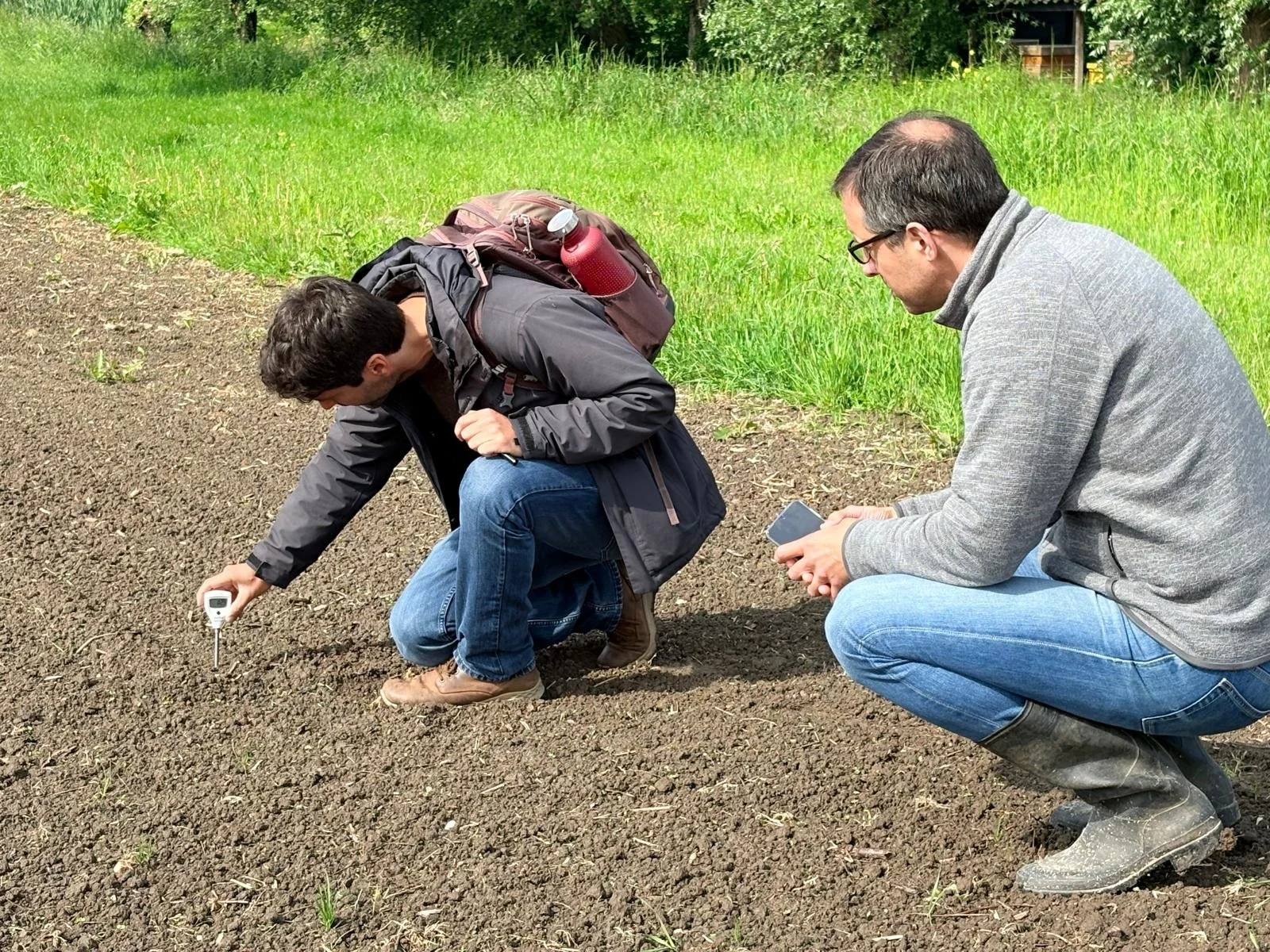
Marco Nardini using the electric conductivity metre in the field.
Looking to the Plant Health Pyramid
One framework we've found useful here is the Plant Health Pyramid, developed by John Kempf, founder of Advancing Eco Agriculture and a leading crop health consultant. It describes four stages plants move through as they become healthier and more naturally resistant to pests and disease. The first and foundational stage is what Kempf calls complete photosynthesis: plants producing significantly more sugars in each day of sunlight, and converting them efficiently into complex carbohydrates rather than leaving simple, unstable sugars behind.
What matters practically for us is that this first stage can be measured simply, in the field, with a refractometer — the same instrument used to read Brix levels in fruit and vegetables. Kempf notes it's common to see crops move from a baseline Brix reading of 3–5 up to 12–15 once plants are properly supported: a meaningful jump in photosynthetic quality, and one we believe tracks with nutrient density.
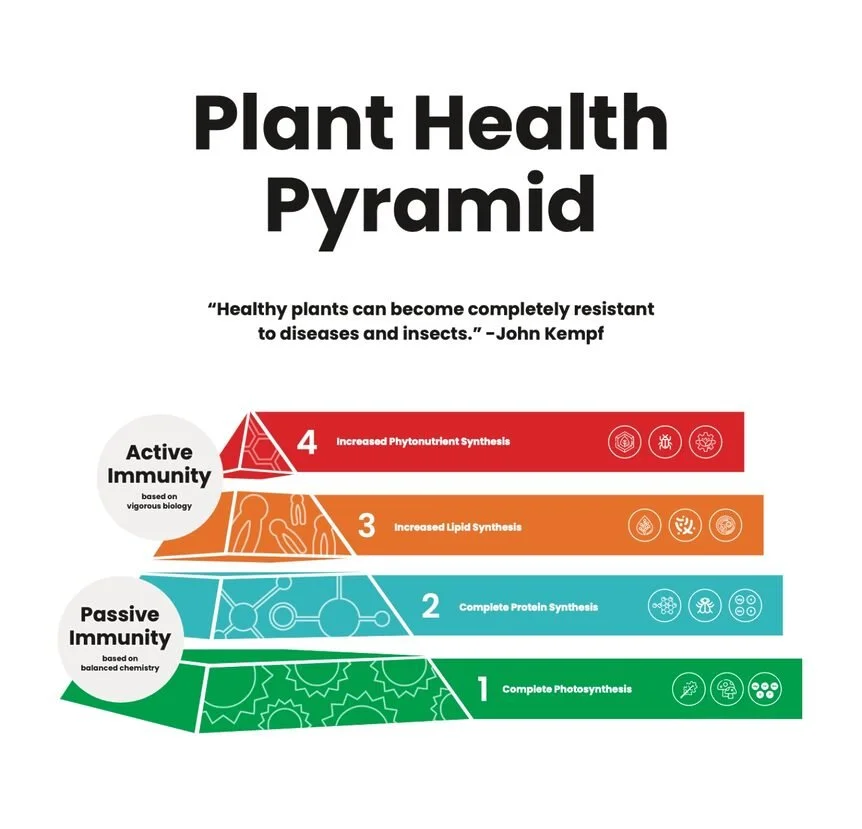
The plant health pyramid by Advancing Eco-Agriculture.
Why Brix, and why now
Using Brix as a proxy for produce quality isn't a new idea. Dan Kittredge, founder of the Bionutrient Food Association, has made this case for years: a refractometer costs a fraction of a lab test, needs no battery, and can be reused indefinitely. All it takes is a drop of juice from a garlic press. It won't tell you everything a full nutrient panel would, but it gives an immediate, repeatable signal — one every farmer, and every organisation like ours, can start using today.
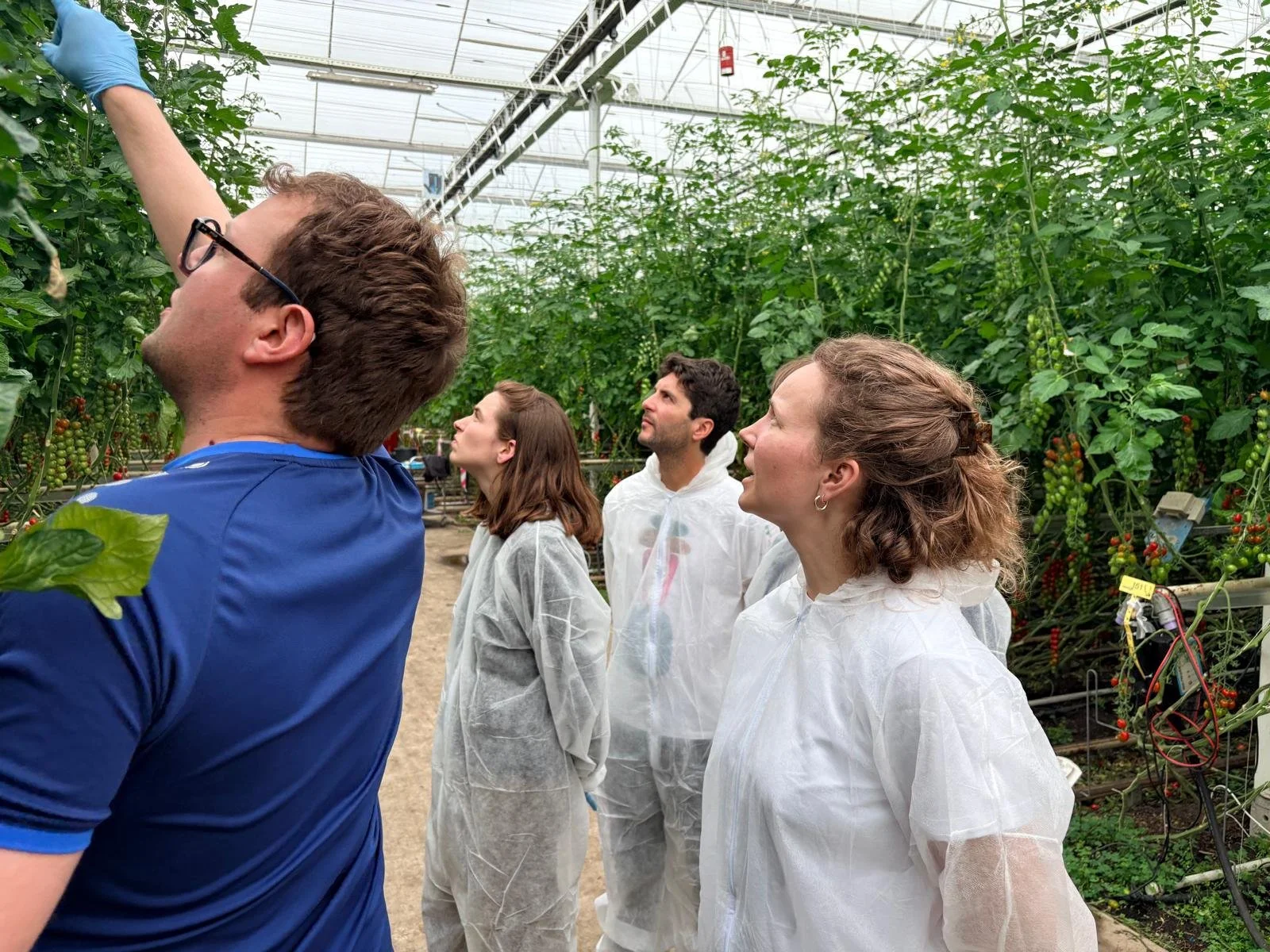
Agronomic visit to biodynamic in-soil grower.
Building our own database
So that's what we are doing now. We're building our own database — Brix readings on the produce we receive each week, alongside the compaction and EC readings we're now collecting on farm visits - tracking how the produce we procure trends against the nutrient Brix reference tables available. Over time, this will let us track quality across suppliers and seasons - not as a replacement for deeper nutrient science, but as an honest, achievable starting point that keeps us accountable for what we're actually delivering to the people in our programmes.
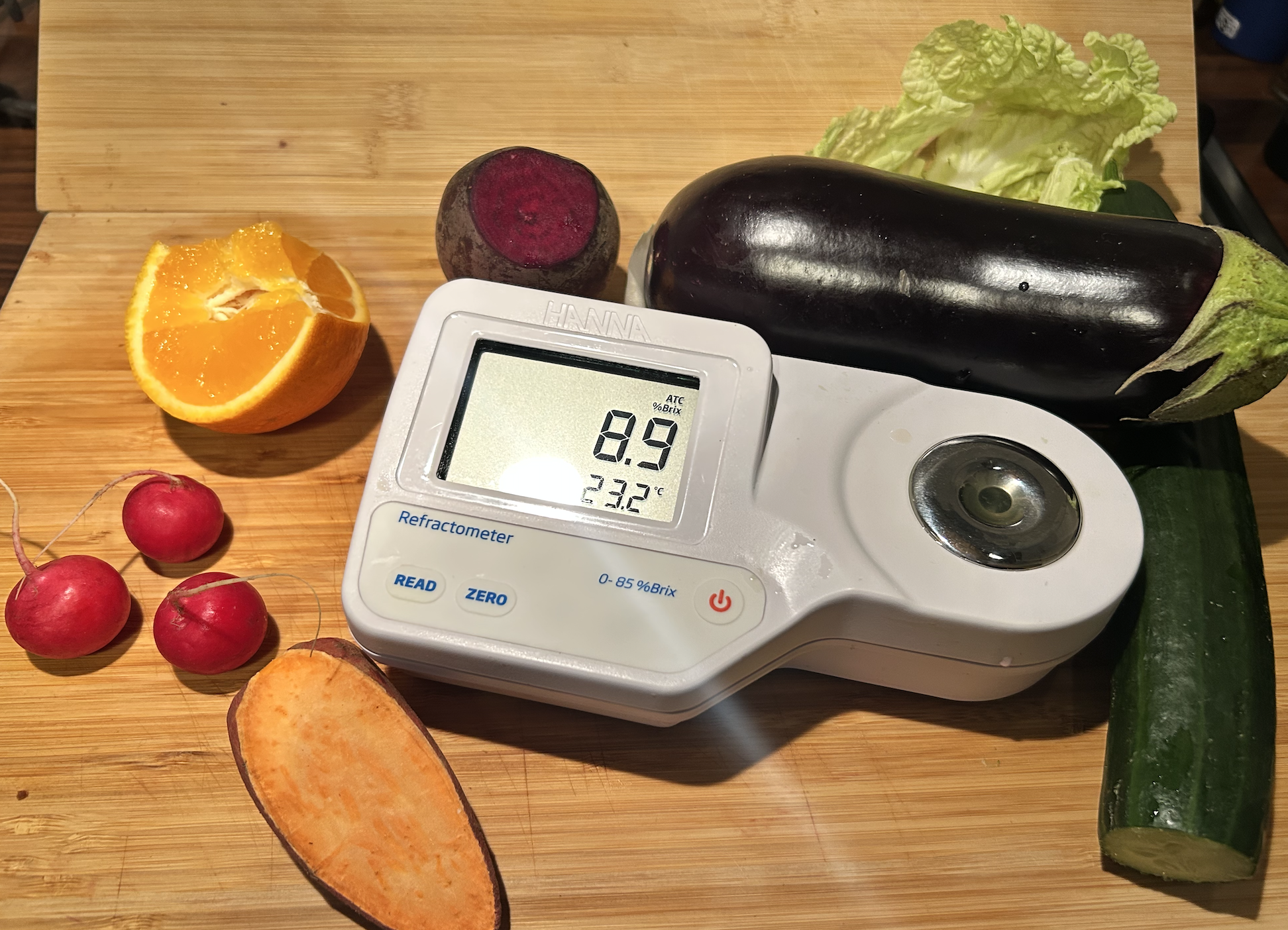
Electric Bricks metre.
Our vision
We believe food should be treated, and subsidised, as medicine. Brix readings won't get us all the way there. But the broader movement on nutrient density — with laboratories and tests increasingly able to assess mineral, vitamin and phytochemical content — will keep advancing the possibility of food subsidies, and of differentiating farms by more than yield per hectare.
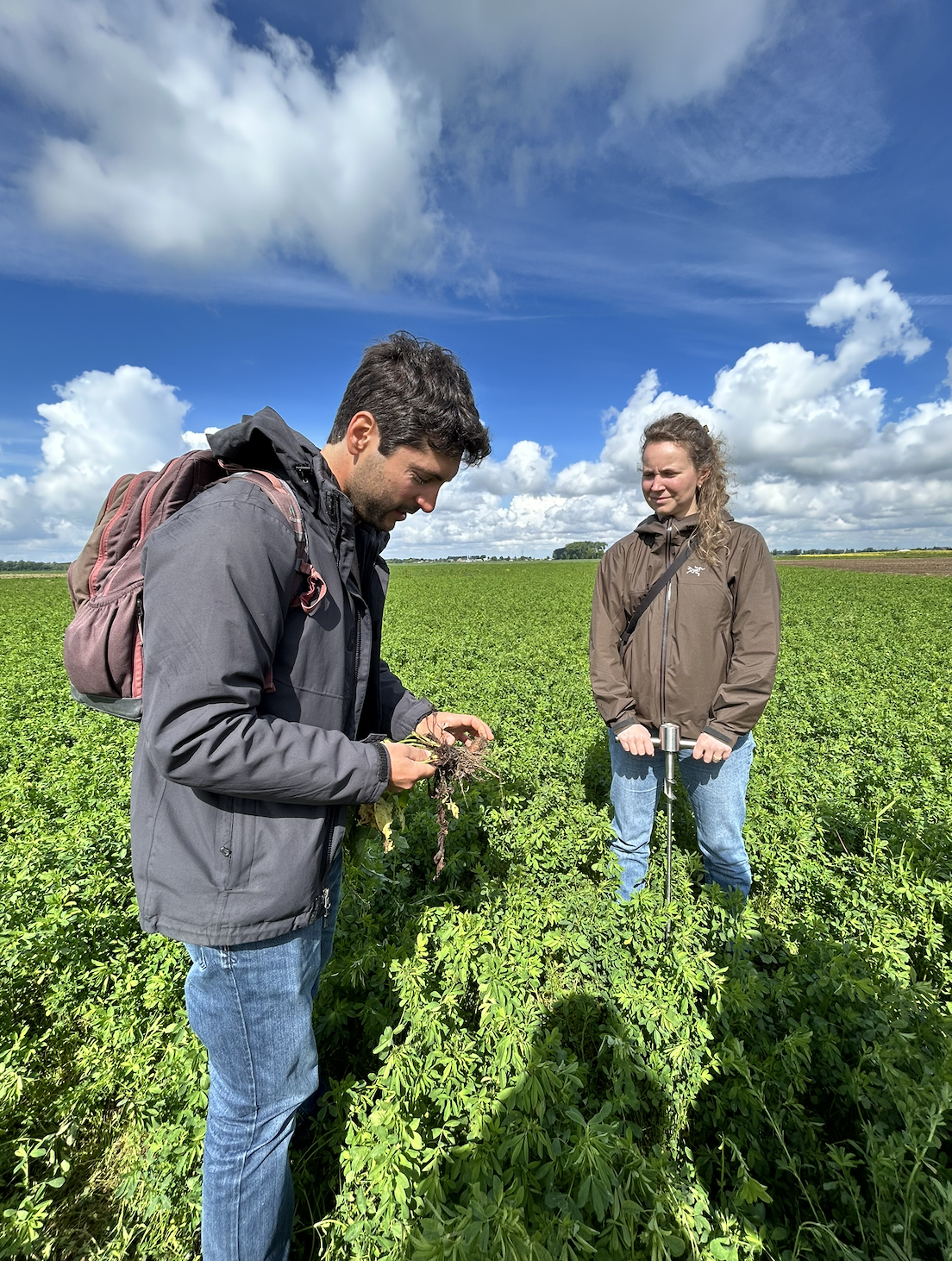
Ana Vande Pelpo and Marco Nardini looking at bio-indicator weeds in the field.